

I remember the spotlight.
It was blinding.
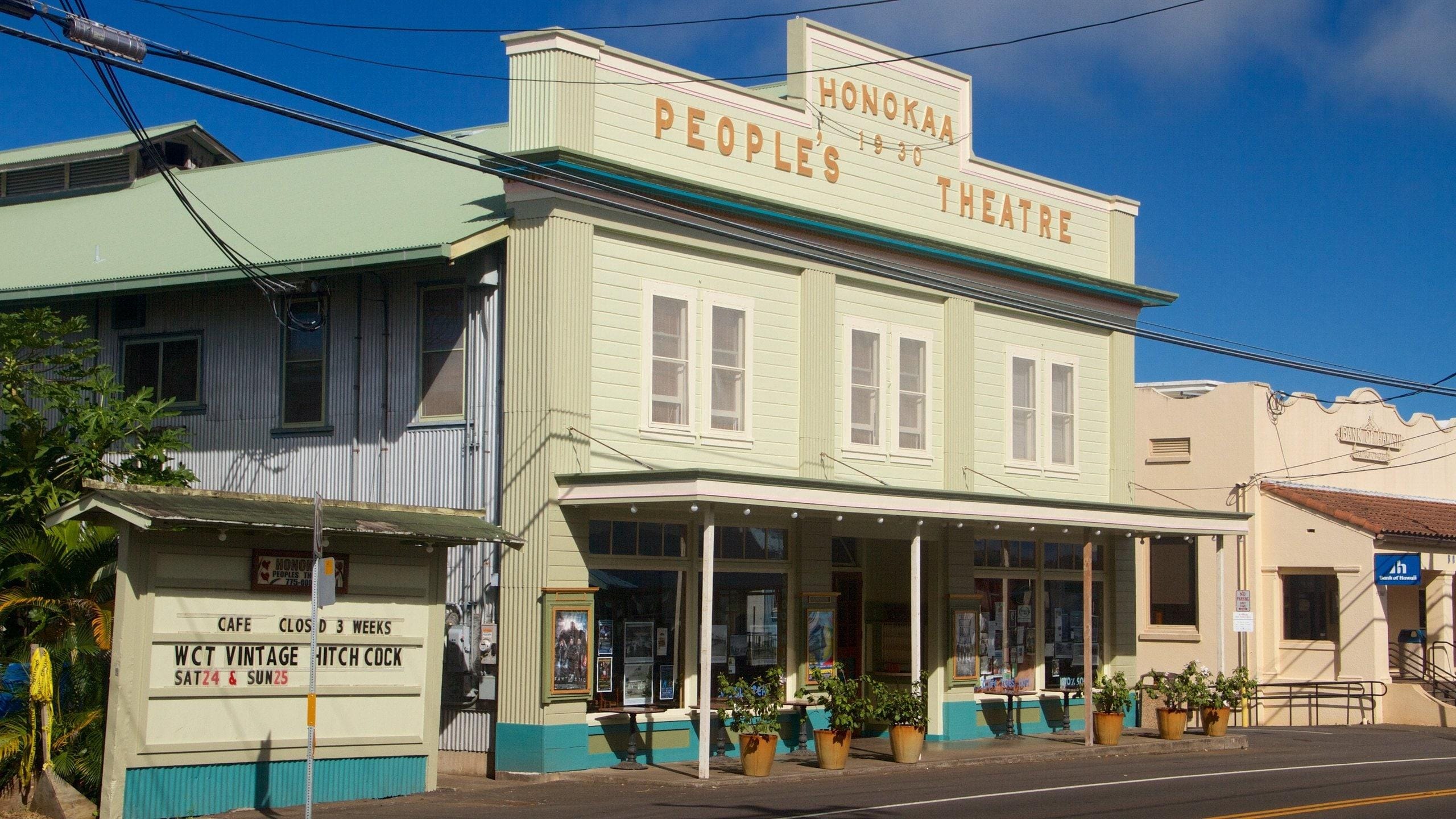
Somewhere beyond it was an audience I could hear but could barely see. I was sitting onstage at the Honokaʻa People’s Theatre, sweating, wondering how I’d gotten myself into this situation.
And, more importantly, how I was going to get out of it.
I wasn’t prepared for any of this.
At the time, I was the executive director of the Big Island Farm Bureau. Alan Takemoto, who headed the Hawaiʻi Farm Bureau Federation, had asked me to read a statement representing the organization’s position at a public discussion about genetically modified organisms.
I knew Hawaiʻi Island. I knew agriculture. I knew farmers, ranchers, and the challenges they faced.
But the science and politics surrounding genetic engineering? I was barely beginning to understand them.
And I had just walked into a room full of people who had very strong opinions.
Nancy Redfeather sat to my left, another activist to my right, and Dennis Gonsalves, the Hawaiʻi-born scientist who helped develop the Rainbow papaya, sat farther down the stage.
Yoshito Takamine, founder of the Hāmākua Farm Bureau and a respected leader in Hawaiʻi, was in the audience. He was there to support me, along with a group of farmers I knew.
I would need it

The Scientist in the Spotlight
Dennis Gonsalves had helped develop a genetically engineered papaya resistant to papaya ringspot virus, a disease that had devastated Hawaiʻi’s papaya farms.
The Rainbow papaya was a remarkable achievement in agricultural science.
But scientific achievement didn’t seem to matter in that theater.
What I remember most was the hostility.
Questions came loaded with accusations. The atmosphere was tense and personal, and Gonsalves became a focus of the anger.
I was out of my depth, uncomfortable, and beginning to realize this wouldn’t be the ordinary agricultural discussion I’d expected.
When my turn came, I read the Farm Bureau statement in a shaky voice.
There were boos and derogatory comments from the audience, but they let me finish.
And finish I did.
Then I shut up.
I sat there shaking like a leaf, under that blinding spotlight, wishing I could be anywhere else.
There was no graceful way to leave. I still had to sit through the rest of the evening.
So I stayed.
Sweating.
Fuck Them. Let Them Hate.
When the evening was finally over, I made my way out of the theater with Yoshimoto Takamine and a group of farmers who had come to support me.
Yoshimoto had spent decades working in agriculture, politics, and community affairs. He understood public controversy in ways I hadn’t yet begun to appreciate.
As we were leaving, he offered his assessment of the evening.
“Fuck them. Let them hate.”
It was the first time someone I worked with had ever said anything like that to me.
I didn’t know quite what to make of it.
I was accustomed to the idea that if you worked hard enough, explained an issue clearly enough, and treated people fairly, you could find some common ground.
I wasn’t naïve about disagreements. Agriculture had plenty of them.
But this was different.
Some time later, after another contentious public meeting left me in tears, Yoshimoto offered more wisdom.
He always called me by my full name. Never Lorie.
“Lorena,” he said, “if they’re not talking about you, then you’re not doing anything right. You’re doing plenty right.”
I didn’t forget those words.
It would take me years to fully appreciate what he was teaching me.
He wasn’t telling me that criticism didn’t matter or that everyone who disagreed with me was wrong.
He reminded me that I couldn’t measure my work’s value by how much people liked me.
And in the years ahead, that would become a lesson I needed more than once.
What I Didn’t Understand
It would make a better story if I told you I walked out of that theater suddenly understanding the politics of science, the psychology of persuasion, and how public opinion can be shaped.
But I didn’t.
I walked out shaken.
I knew very little about genetic engineering then. I didn’t know enough about the broader political movement that was gathering momentum around biotechnology in Hawaiʻi.
And I certainly couldn’t have imagined how much of my professional life it would eventually consume.
Over the following years, I would learn far more than I ever expected about genetic engineering, pesticides, agriculture, legislation, advocacy, and the complicated relationship between science and public opinion.
I would also learn that people brought far more than facts to these arguments.
They brought their fears, experiences, loyalties, cultural beliefs, political identities, and deep convictions about who deserved their trust.
Those concerns couldn't all be answered by presenting another scientific paper.
But not every claim deserved equal weight simply because someone believed it passionately.
Learning to distinguish legitimate questions from unsupported allegations, genuine disagreement from political theater, and persuasion from manipulation became a large part of my work.
It took years.
And sometimes, it was exhausting.
The People’s Theatre
I didn’t appreciate the irony of the theater’s name that night.
I was far too busy trying to survive the evening.
But I came to appreciate it later.
And every year since, the irony has grown a little richer.
The Honokaʻa People’s Theatre.
In the years that followed, arguments that began in rooms like that one spilled into legislative hearings, county council chambers, newspaper columns, grocery stores, and ordinary conversations across Hawaiʻi.
I came to understand how powerful public sentiment could be—and how difficult it could become to have a reasoned discussion once people had decided which side they were on.
The actual science could become almost beside the point.
And there I was, years earlier, sitting under a spotlight in the People’s Theatre, thinking I had come to read a statement.
I hadn’t understood that I was stepping into something that would shape much of the next twenty years of my life.
Twenty Years Later
I still believe in facts.
Perhaps more strongly than ever.
But I no longer confuse having the facts with winning an argument, changing someone’s mind, or earning their trust.
Those are different things.
Evidence can tell us what research supports. It cannot automatically determine what someone is willing to believe.
And people who disagree with us aren’t necessarily ignorant or dishonest. Sometimes they’re asking different questions. Sometimes they’re working from different experiences. Sometimes they have legitimate concerns that deserve answers.
And sometimes they've simply been sold a tall, cold glass of fear.
Because fear sells.
Fear can move people to action long before they’ve stopped to question what they’re being told. And people who understand how to exploit it can turn complicated issues into simple stories with heroes, villains, and very little room for questions.
Sometimes a compelling story outweighs the evidence.
Sometimes the story is designed to ensure the evidence never gets a fair hearing.
The challenge is knowing the difference.
I didn’t learn that lesson overnight.
That night was only the beginning.
I went into the Honokaʻa People’s Theatre to read somebody else’s statement.
Nearly twenty years later, I’m still thinking about what happened under those lights.
Only now am I finally telling the story in my own words.